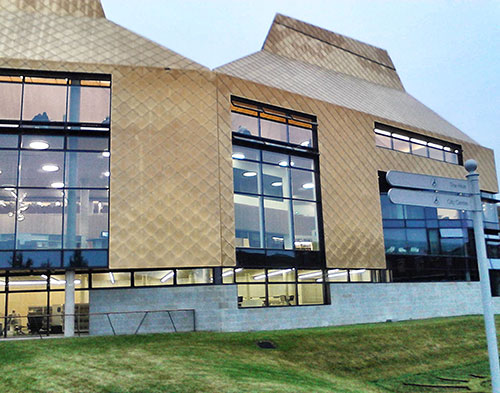
“If I had time to study war, I think I should concentrate almost entirely on the ‘actualities of war’ the effects of tiredness, hunger, fear, lack of sleep, weather - it is the actualities that make war so difficult and are usually so neglected by historians.” Field Marshall Lord Wavell to Basil Liddell Hart
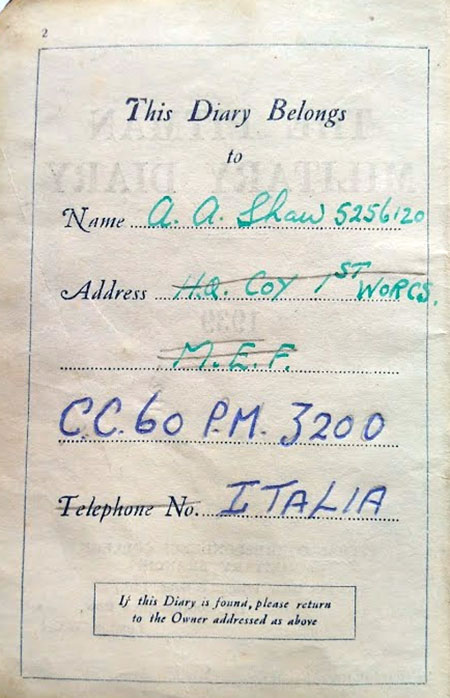
AA Shaw Military Issue Diary
Most families can recount stories or recollections of ancestors who have served in the armed forces. Many of those returning from war chose not to share their experiences, and therefore the detail of what happened to them remain as dark tales, never to be shared, and absent from the historical telling of warfare, as described in the quote above.
Small items of memorabilia might be all that remain, such as a medal or old photos, stored away in drawers long forgotten. For my own family, there survives one such artefact, which started a journey of discovery about my paternal grandfather Arthur Alfred SHAW (1913-1973) and his World War Two experiences.
Arthur was taken a Prisoner Of War (POW) at the Fall of Tobruk in June 1942, a low point in the Second World War, and seen as a catastrophic failure of a World War Two campaign.
Hitler’s Soft Underbelly
My grandfather Arthur Alfred SHAW, served as a private in the Worcestershire 1st Battalion, in World War Two. The Worcestershires were part of the Gazala Battle and the defence of Tobruk, a small town on the Libyan Coast and central to fighting in the Western Desert. Rommel’s instructions stated that after capturing Tobruk, the main Axis strategy was to be directed to the capture of Malta.
As such the Mediterranean was described as “Hitler's Soft Underbelly", and became the focus of British forces deployed in North Africa, to protect British empire interests in the East, in addition to forces deployed across Europe to defeat the Germans.
Therefore the fall of Tobruk in June 1942 was considered a catastrophic defeat, and the dismay was bitterly felt by Britain and particularly regretted by Winston Churchill.
The Diary
With a dark brown cover, tatty corners, delicate faded golden edged pages; the diary has sat many years in many drawers, kept safe and treasured. The diary came by way of my father, Ronald, as it belonged to my grandfather Arthur Alfred SHAW, who served as a private in the Worcestershire 1st Battalion, in World War Two.
What makes this diary all the more fascinating is how it records Arthur’s time spent in the army, in the run up to the fall of Tobruk in June 1942 and includes his first year as a Prisoner of War (POW) in Italy.
The keeping of a diary must have been a risky business and considering Arthur spent nearly three years in captivity, it’s a wonder that such a fragile diary and its contents survives to this day. That the diary did survive is testimony to its importance, it must have meant as much to his family, as it did to Arthur.

AA SHAW Diary ‘1942’
The diary was originally issued for the year 1939, but throughout its pages the dates have been changed to the year 1942. The name page of the diary, contains the most significant personal detail, that of his name A.A. SHAW, army number 5256120, regiment HQ Coy, 1st Battalion Worcestershire and division Middle Eastern Forces. This detail Arthur crossed through to include the location at the POW camp as CC 60 P.M. 3200, Italia.

AA SHAW Diary ‘Tobruk Fell Taken POW’ 21st June 1942
Arthur was taken a prisoner of war at the Fall of Tobruk on 21st June 1942, he was to endure captivity up until his repatriation from Germany at the end of the war in 1945. Although the task of transcribing Arthur’s diary was difficult at times due to the small print, what it contained proved to be an amazing insight into his war time experience.
It revealed the minutia of daily life in the prisoner camp, weather, conditions, duties, sleep and most importantly food and the Red Cross parcels he received. I extended my research beyond the diary’s tiny pages, to obtaining his service records, information from the International Red Cross Association Archive, the Worcestershire Regimental Museum and The National Archives.

AA SHAW Diary ‘Bread for Shaving brush & Socks’ Sunday 2nd August 1942
Of all the entries in the diary, the line ‘Bread for shaving brush & socks’ sums up the fortitude and resilience to maintain basic standards, where food was used to barter for small essentials that could maintain dignity, such as a shaving brush and socks.
From what I have deduced from other entries in the diary, it would appear that it was Arthur’s bread that was exchanged, he having received the brush and socks. In this journey he describes how he ‘had some sleep on deck’, as he was transported by ship on the notorious crossing to Tripoli and Naples.
Bartering was clearly an essential way of sharing scarce resources, and a continued trend recorded throughout Arthur’s diary. Despite such deprivations, Arthur describes in the diary his appreciation of the ‘wonderful scenery’ on the journey by train from Naples to the POW camp near Lucca, Italy.
As a young man brought up in the inner city of Hockley, Birmingham, such travel would have been far beyond his reach or experience. It’s heartening to think that despite it all, he could still appreciate the Italian scenery.
Red Cross Parcels
Arthur painstakingly describes the arrival and the contents of every Red Cross Parcel that the POWs received. These parcels, along with letters from home, appear to be the most important contribution to keeping up morale.
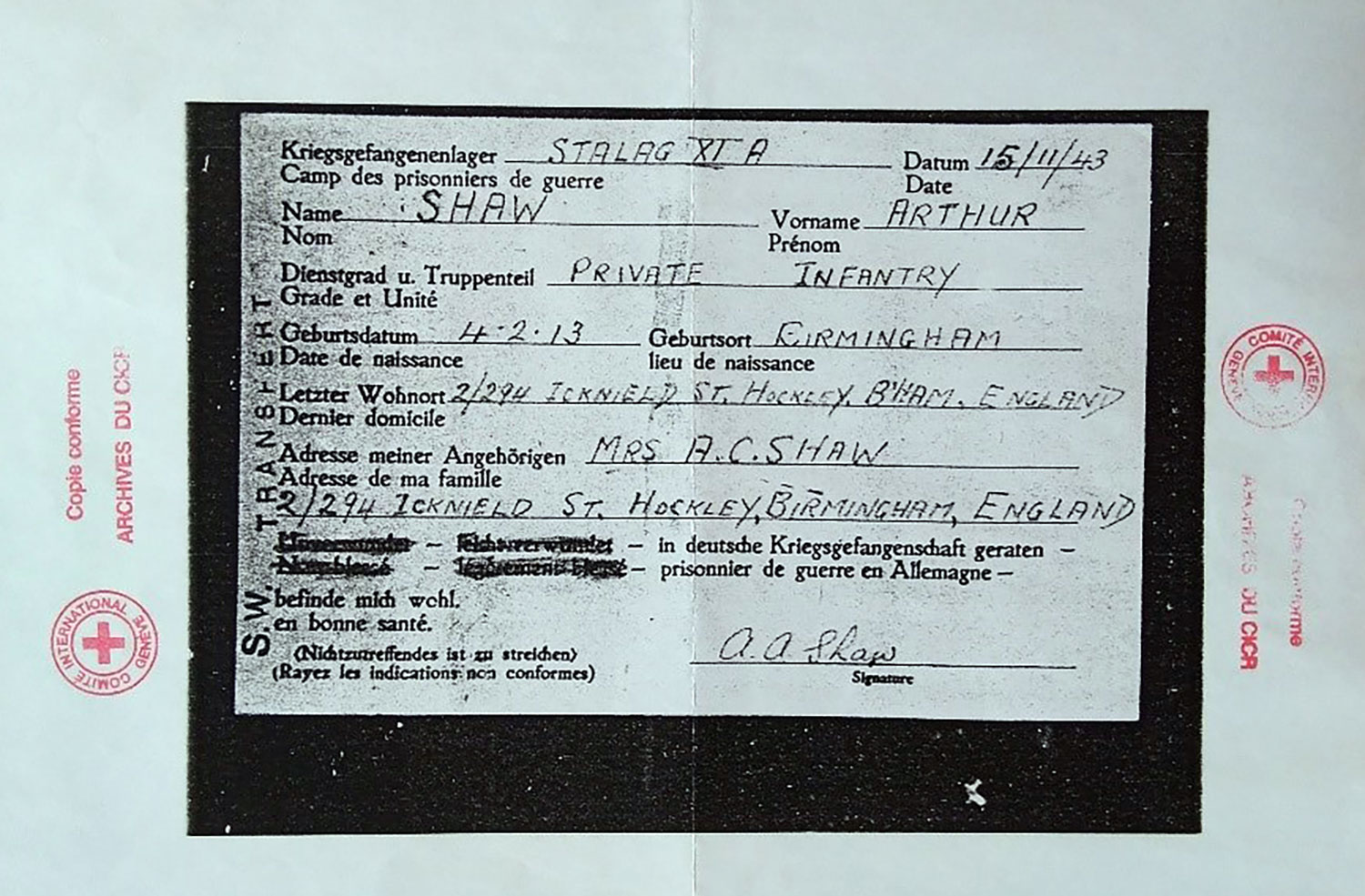
AA SHAW’s ICRC Capture Card Stalag XIA
A useful source of information was provided by the International Committee of the Red Cross (ICRC), the same organisation responsible for the distribution of the much valued Red Cross parcels described in Arthur’s diary. The ICRC provided a copy of Arthur’s Capture Card for Stalag XIA and his Attestation record as depicted above.
Having Arthur’s diary was treasure enough in itself, but I wondered whether other war time artefacts associated with his experience survived at Regimental museums.
Letters from Home
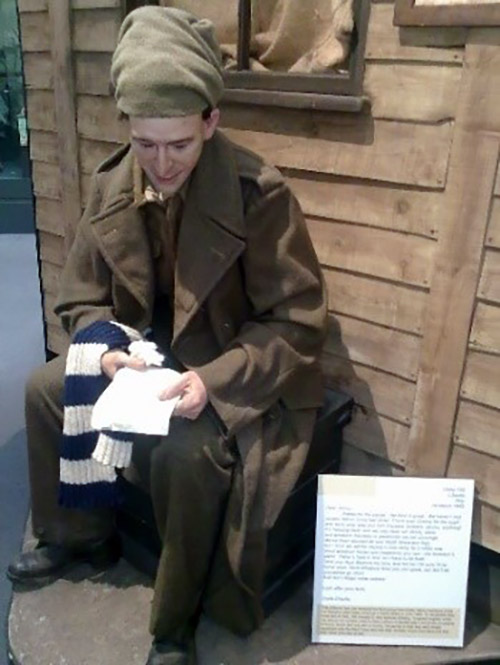
‘Letters from home’ Worcestershire Regimental Museum
The Worcestershire Regimental Museum is located at the Worcester City Museum and Art Gallery. The most poignant of exhibitions there was a POW display which directly referred to Arthur’s campaign, capture and his experiences in the Italian camp, amongst other displays documenting the regiment’s history, battalion equipment, military uniforms and medals, to name but a few.
The museum display ‘Letters from home’ illustrated just how important contact with home was for the morale of prisoners of war. Depicted above is a soldier of the Worcestershire Regiment sitting on an upturned box, holding a hand knitted scarf from home, in a POW camp following capture at Tobruk.
POWs were moved around North Africa, and it could be months before they were settled in Italian camps, and registered with the Red Cross. Up to that point many families, including Arthurs, would not know if their loved ones were dead or alive. This I know to be true, because Arthur describes his disappointment in not receiving letters, when other POWs around him had.

Arthur Alfred SHAW (1913-1973)